 Maya
Maya Houdini
 Nuke
Nuke Arnold
 KeyShot
 V-Ray
V-Ray Substance Designer
 Mari
Mari Marvelous Designer
 Marmoset Toolbag
 3ds Max
 3DCoat
 Redshift
 After Effects
 Faceform Wrap
 Lightroom
 OctaneRender
 SpeedTree
 Daz 3D
 Agisoft Metashape
 Fusion
 Modo
Modo RealityCapture
 Gaea
Gaea Cinema 4D
 Gravity Sketch
 Premiere
 Procreate
 Substance 3D Modeler
 Katana
 Mudbox
 Krita
Krita World Creator
 Yeti
Yeti Ziva VFX
 SketchBook
 Quixel DDO
 Mixamo
 Natron
 Quixel Bridge
 Quixel Megascans
 Adobe Medium
 Quixel Mixer
 SynthEyes
 Clip Studio Paint
 SketchUp
 Unity
Unity Gaffer
 Massive
 Materialize
 Ornatrix
 PreForm
 Corel Painter
 Moi 3D
 QuickTime
 Storyboard Pro
 animBot
 ReCap
ReCap Meshmixer
 DaVinci Resolve
 World Machine
 xNormal
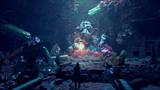



In this beginner-to-intermediate-level workshop, Rodrigo Brea shares various professional techniques and approaches for building stylized environments. This 5-hour guide covers topics including how to analyze a concept and create a breakdown; how to set up a basic scene in Unreal 5; different ways to create a variety of assets, from grass/foliage/trees to a hero piece; as well as how to texture and create a reusable Substance Smart Material.
Rodrigo utilizes a few key software choices, including Unreal Engine 5, Blender, ZBrush, Substance Painter, Photoshop, TreeIt, and Autodesk FBX Converter. Using these tools, he offers an industry-insider’s perspective to tackling and approaching the creation of stylized assets for professional games.
You’ll see how the final scene is set up, and learn Rodrigo’s approach for lighting, as well as a few simple methods he uses to render out beauty shots and a video for presentation. The techniques taught will be not only helpful for creating a scene from a concept, but will also be applicable to any stylized environment you may want to create.
By completing this workshop, you’ll have a better understanding of the workflow professional game artists use for creating stylized environments, and you will know a variety of ways to problem solve and approach different results.
Accompanying this workshop are two downloadable folders; one includes Rodrigo’s completed Unreal 5 Project including all its assets; a second folder offers Rodrigo’s working files from the various software packages utilized in this workshop.
14 Lessons
The first lesson of Rodrigo Brea’s workshop on environment art covers preliminary analysis. This phase of the work is about create a clear road map before jumping into production, breaking down concept art into manageable components, establishing accurate scale, and identifying opportunities for asset reuse.
Duration: 14m 40s

This lesson emphasizes that building a reference board is important for making creative decisions throughout the environment-creation process. By combining realistic references with stylized material, artists can ground their work in reality while achieving a distinct aesthetic. Taking time to gather good references creates a valuable resource to which artists can return whenever creative direction is needed during production.
Duration: 2m 40s

This lesson introduces a workflow for translating concept art into a 3D environment in Unreal Engine. Rodrigo demonstrates practices such as proper project setup, measurement-based blocking, and organized asset structure. Starting with basic primitives and scale references, this approach allows for quick changes and composition adjustments before committing to final asset creation.
Duration: 26m 45s

In this lesson, Rodrigo establishes a foundation for cross-software asset creation in Unreal Engine, Blender, and ZBrush. Preparing reference meshes with correct scaling, origins, and transformations ensures that new assets created in external software maintain proper proportions when imported into Unreal Engine. These preparations prevent scaling and alignment issues that could cause complications during asset creation.
Duration: 9m 51s

This lesson demonstrates a procedural approach to creating game-ready grass patches in ZBrush. By building reusable InsertMesh brushes and using NanoMesh, artists can generate varied grass patches while maintaining full control over individual elements. The technique is suitable for both small detail work and populating large-scale environments.
Duration: 26m 6s

This lesson sets out how to finalize the grass in Blender, emphasizing the importance of proper organization, data verification, and correct technical setup. By following these steps, artists can ensure that their grass patches import into Unreal Engine with all necessary data intact and are properly configured for optimal visual results.
Duration: 11m 34s

This lesson introduces TreeIt: an accessible solution for creating procedural foliage assets. While achieving exact matches to concept art can be challenging with procedural generation, the software's parameter controls and randomization features make it efficient for creating both hero assets and background variations.
Duration: 20m 47s

This lesson explains how to prepare the trees for use in Unreal Engine. While TreeIt creates some initial formatting issues, using FBX Converter and making a few simple adjustments in Blender can resolve these problems. The models import with well-organized UVs and properly separated materials, requiring minimal cleanup.
Duration: 7m 10s

This lesson demonstrates a technique that converts photorealistic textures into stylized textures using Photoshop’s filters, reducing detail while preserving color and shape information. This approach is particularly effective for secondary environmental elements where speed and consistency matter more than intricate detail.
Duration: 7m 46s

This lesson demonstrates how the OCD plugin for Blender streamlines the process of creating damaged stone structures by providing procedural controls for weathering and breakage. Rodrigo’s workflow combines procedural adjustments in Blender with manual refinement in ZBrush, speeding up asset creation while maintaining artistic control. This approach is useful for assets destined for Unreal Engine's Nanite system, where higher polygon density is acceptable.
Duration: 23m 47s

This lesson demonstrates the process of creating a monolith in ZBrush, following a workflow that combines procedural generation and manual sculpting. It is important to work non-destructively, avoiding repetitive patterns, and maintaining proper topology for normal map baking.
Duration: 49m 18s

This lesson demonstrates how the Real Snow add-on for Blender can be used to add organic surface detail like moss or vegetation to assets without the need for manual modeling. While the tool requires some adjustments and post-processing, it significantly speeds up the creation of natural-looking surfaces. Combined with proper UV mapping and texturing techniques, this workflow enables realistic environmental detailing.
Duration: 6m 18s

This lesson demonstrates a professional workflow for creating stylized game textures that balances procedural efficiency with artistic control. By building smart materials, artists can achieve stylized looks that can be reused across assets. Topics covered include implementing consistent roughness values and the blur slope technique for achieving painterly effects.
Duration: 48m 39s

The final lesson in the workshop emphasizes that creating compelling 3D scenes doesn't require massive asset libraries or complex systems. Through organization, optimization and good artistic decision-making, artists can produce professional results efficiently.
Duration: 52m 46s

Primary tools
For this workshop you’ll need:


* Note that these programs and materials will not be supplied with the course.
Project Files
Downloading the workshop files will give artists access to Rodrigo Brea's asset files. Inside, you'll find:
- 3D models – High-quality .fbx files for rocks, vegetation, and architectural elements
- Source files (.blend, .ztl, .spp) - Original Blender, ZBrush, and Substance Painter files for artists to see the complete modeling and texturing workflow - The instructor provides these files to give artists hands-on practice as they follow the demonstrated workflow. –
Skills Covered
Who’s this Workshop for?
This workshop is designed for beginner to intermediate-level 3D artists, environment artists, and game developers who want to master professional stylized environment creation workflows. Artists with basic knowledge of 3D software will also find this valuable for advancing their skills.
Concept artists transitioning to 3D, indie game developers, and hobbyists seeking industry-standard techniques will also benefit. Artists will gain insider perspectives on professional game asset creation and learn methods used in commercial game development studios.
Learning Outcomes
By completing this workshop, artists will have developed an understanding of professional stylized environment workflows and asset creation techniques used in game development.
Key skills include:
- How to analyze concept art and create effective project breakdowns for environment creation.
- How to set up optimized scenes in Unreal Engine for stylized game environments.
- How to create assets, including grass, foliage, and trees.
- How to texture assets and develop reusable Substance Smart Materials for efficient workflows.
- How to implement professional lighting setups that enhance stylized environments.
- How to render beauty shots and create presentation videos for portfolio and client showcases.
- How to problem-solve asset creation challenges using multiple software packages and approaches.